Blue Band Running Down the Center of a 100 Bill
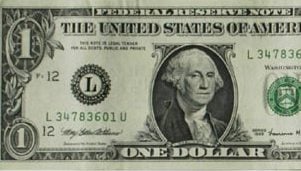
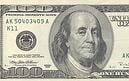
Many of our customers ask us - Why is the UV security feature on the $100 bill more difficult to see than it is on the other denominations? It is a good question, and one which users of the FraudFighter™ line of UV currency detectors have asked for years. To give a little background, in 1996, the Bureau of Engraving & Printing (BEP) released the first major redesign of the US currency in decades. The redesign was conducted in order to combat a rising tide of high quality counterfeit dollars produced by "off-set" printing techniques. The new design were often called "big heads" by collectors and others in the field due to the fact that the portrait of the U.S. historical figure depicted on the banknotes were increased in size by more than 400% from the previous design. When compared side-by-side, the difference is immediate and apparent. At the time this redesign was performed, a number of new security features were introduced. We have covered these features in an earlier post. Among the security features added was to introduce UV The Teflon strip had been added to the bills in 1988 when the BEP did a minor redesign of the notes. Unfortunately, crafty forgers learned a variety of different techniques to replicate the strip. In some cases, clever printing could give the appearance that a strip was present. In other cases, counterfeit paper stock was created with a darker material inserted to create the illusion of a security strip. In order to overcome this, during the major 1996 redesign, the BEP added a new element to the security strip. During the process of producing the strips, an ultra-violet fluorescent compound was added to the chemical mix. This compound, when exposed to long-wave (ca. 375 nanometer) UV light, will fluoresce, or "glow" a unique color. Each new banknote denomination was created so that the security strip inside the note would glow a different color – red for $100, yellow for $50, green for $20, and so on. For each of the denominations, this glowing thread inside the bill is clearly visible and easy to see – with the notable exception of the $100 bill. For reasons that have never been made clear (despite directly asking the chief designer of the $100 bill at the Bureau during a tour of the facility by yours truly!) the glowing feature in the $100 bill is not as clear or as bright as the other denominations. Conspiracy theories abound as to why this may be the case. Most of them center around the concept that, perhaps, for some reason, our government never really intended for the $100 bill to be secure. We believe it was simple design flaw, although, one has to ask the question – why has the problem not been fixed during the 16 years since the original production run of the new $100 was made? It couldn't have been a difficult fix….. Regardless of the reason, the fact is that the security strip in the $100 can be difficult to see, even under the most powerful UV counterfeit detector available, the UV-16. Now, for some good news. 
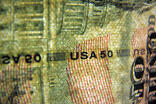 fluorescence into the security strip, a thin Teflon strip built into the currency paper. The security strip is visible when viewed with a light bulb held behind the bank notes. You can see the security strip, with repeating micro-printed text "USA $100" on the $100 bill, "USA $20" on the twenty dollar bill, and so on.
 "sometime soon" (see this article here to learn more) does have an improved fluorescent strip. We know because we have been given samples of the bill and have viewed them under one of our UV-16 machines.
burlingameshoebethe.blogspot.com
Source: https://blog.fraudfighter.com/bid/81315/UV-Verification-of-the-100-Bill
0 Response to "Blue Band Running Down the Center of a 100 Bill"
Post a Comment