Commentary: Sleepless in Singapore? Let’s address our bedroom epidemic
SINGAPORE: Yous shut your eyes merely can't fall asleep until 2am. Or you discover yourself jolted awake in the middle of the nighttime by a work worry.
These scenarios volition be all likewise familiar for many. Inquiry reveals that globally thirty per cent of people experience difficulty in initiating and maintaining sleep.
This is felt in Singapore also, where recent research shows that people are falling far short of the recommended seven hours of sleep per nighttime.
Philips' latest global slumber survey found that insomnia (26 per cent) and snoring (21 per cent) are universal issues that impact slumber for over one in five adults.
And, according to a recent SingHealth written report, four in ten Singaporeans become less than seven hours of shut eye on weekdays, which more than a quarter of united states of america even miss out over the weekends.
Sleep As LITTLE AS POSSIBLE – THE Erstwhile MANTRA
The importance of sleep is in the spotlight as we celebrate World Sleep 24-hour interval today, simply for decades the business elite extolled the benefits of getting past on as little sleep equally possible.
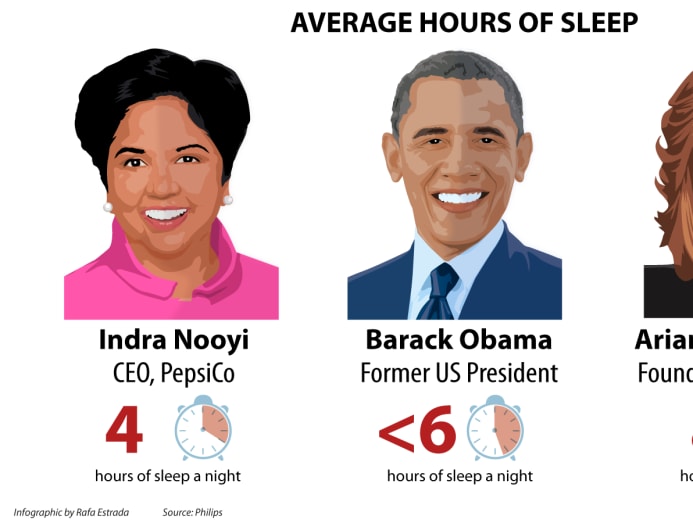
Barack Obama famously survived on less than six hours a night during his presidency. Indra Nooyi, i of the world's nigh-prominent female executives since taking the top job at PepsiCo, averages a measly 4 hours a night.
With only 24 hours in the twenty-four hours, information technology was seen as a simple equation – the less you lot sleep, the more you can accomplish. Until recently, corporate loftier-flyers were expected to burn down the midnight oil and "pulling an all-nighter" was seen as office of the territory for many city jobs.
Thankfully, this attitude is starting to change as more research highlights the negative touch on that lack of slumber tin accept on workplace productivity and health.
The work-life remainder movement is gaining more ground equally Generation Z – the cohort born in the mid-1990s onwards – enters the workforce, forcing employers to completely re-think their working cultures and policies on overtime to retain the all-time talent.

Arianna Huffington is at the vanguard of this nascent workplace revolution, leading the charge against what she refers to as the 20-commencement century's "slumber deprivation crisis", and some businesses are starting to follow adapt in recognising the boardroom benefits of a well-rested workforce.
She says she at present sleeps viii hours a day.
TECH Addiction
Work pressures bated, engineering science addiction is another matter keeping and then many of us up into the wee hours.
The blue-and-white light given off by phones and other devices prevents our brains from releasing melatonin, a hormone that tells our bodies it'southward night. Over-dosing on screen time, particularly just earlier bed, is wreaking havoc on our internal trunk clocks.
Some other common, and growing, problem in Singapore is taking its price on quality of sleep – which tin can be simply as important as the number of hours clocked.
A recent study found that equally many as one in iii Singaporeans endure from a piddling-known sleep disorder called Obstructive Slumber Apnea (OSA), where their breathing stops and starts repeatedly during sleep, sometimes hundreds of times a night.
In addition to the cosmetic and productivity implications associated with sleep impecuniousness, if left untreated sleep apnea tin upshot in a variety of long-term wellness problems too, including high blood pressure, stroke and diabetes.
Although snoring is an audible side effect of this condition, and home testing kits make diagnosis relatively like shooting fish in a barrel, information technology is yet undiagnosed in the bulk of cases in Singapore.
Assistance OURSELVES
Employers and governments certainly have a role to play in prioritising and promoting better sleeping habits. But are we doing enough to help ourselves?
Unfortunately the reply seems to be "no", and many all the same observe it a struggle to address sleep in the aforementioned way they would do or nutrition.
Philips' global sleep survey found that although adults recognise the significant impact sleep has on their overall health and wellbeing, even surpassing exercise, financial security and nutrition, less than half maintain a regular bedtime schedule and less than i in three feel guilty nearly not maintaining good sleep habits.
Interestingly, the study likewise institute that there is much more rigour paid to schedules for meals and wake-up time and more than guilt effectually do and eating habits than there is towards quantity and quality of sleep.
This has to change.
From being stricter about a "digital detox" in the bedroom, to seeing the md to diagnose whether snoring could be something more serious, it'south time for united states of america all to make sleep a priority, and stop putting up with any less than seven hours a night.
So, if yous're reading this in bed and it's late, switch off now.
Caroline Clarke is CEO of Philips ASEAN Pacific.
0 Response to "Commentary: Sleepless in Singapore? Let’s address our bedroom epidemic"
Post a Comment